Special Events Tickets
Making it easy for guests to discover and buy Disney special event tickets directly in the app, no website detour required.
Client: Disney
Role: UI/UX & Visual Designer, working with Product Design Lead
Timeline: Q1 2018
Tools: Sketch, keynote, unmoderated testing, whiteboarding
The ask
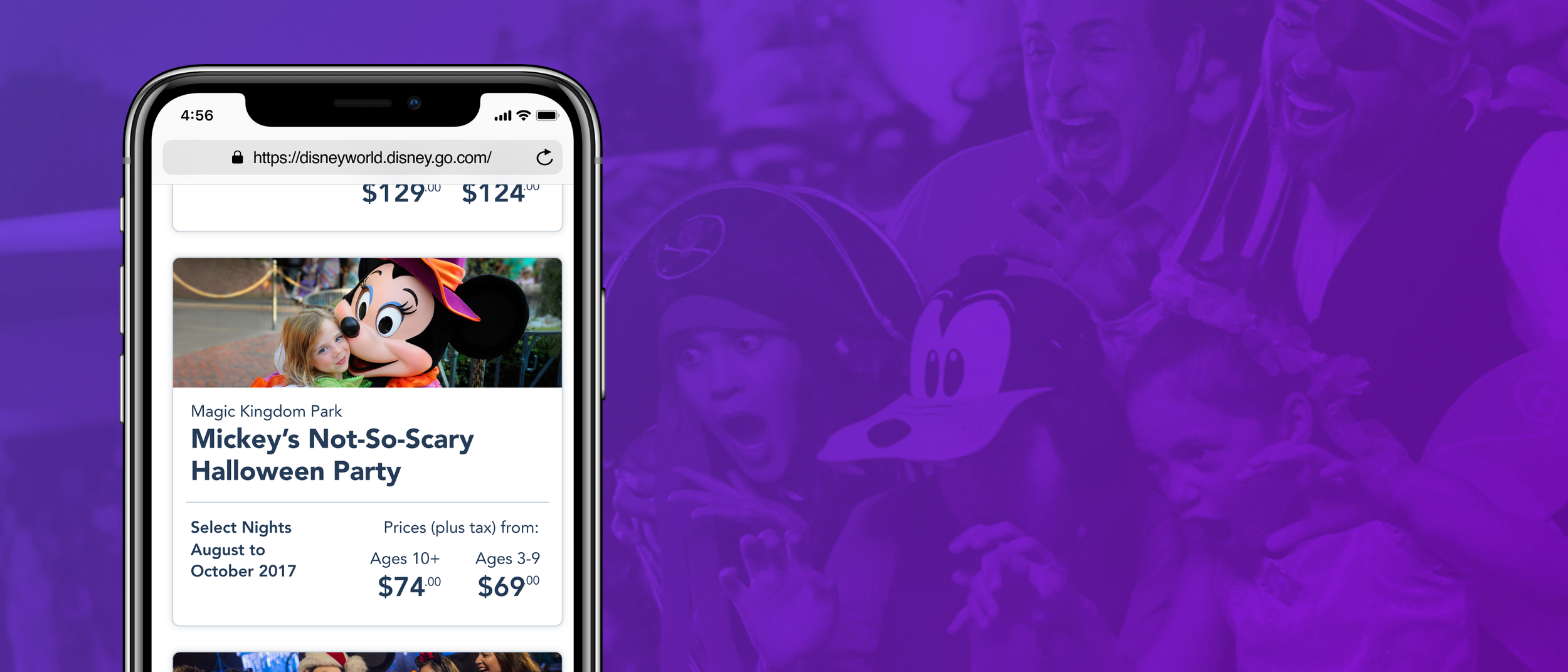
Enable special events sales in the Parks apps as the first step in a comprehensive effort to monetize app engagement, which would eventually scale to include upgrades, extras, and special offers.
Existing Ecosystem
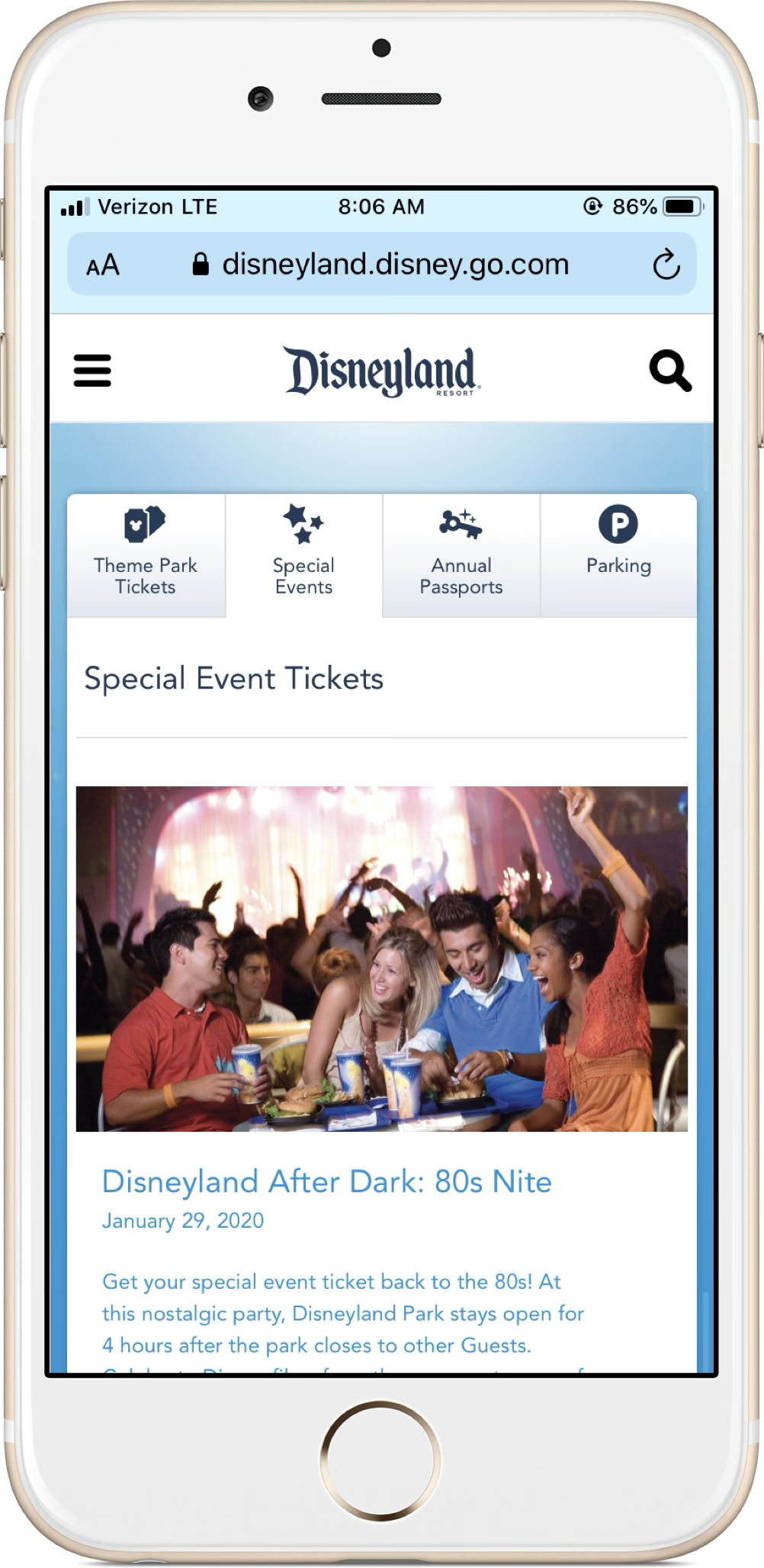
While the existing native mobile app worked well for purchasing tickets and in-park experiences like ordering food, special events tickets were not accessible. Park guests would have to go to the website to purchase special event tickets, magic extras, and upgrades.
Considerations & opportunities
Development schedule
This project was fit into the existing development schedule for app improvements.
Scalability
This project was the first in a series to uncover overlooked sales opportunities, and would need to scale to accommodate future requirements.
Parity with web experience
The goal was to establish parity with web functionality, while exploring new entry points, states, and marketing opportunities.
User Goals
Through existing research, we were able to identify two user groups: all park guests, and annual passholders in both CA and FL. Their goals related to this problem space:
Know what events are happening
They should know what is happening and when.
Be able to find pricing relevant to them
All guests, including annual passholders and residents, should be able to see ticket pricing relevant to them.
Purchase tickets
Guests should be able to purchase tickets directly on the app.
Validation testing
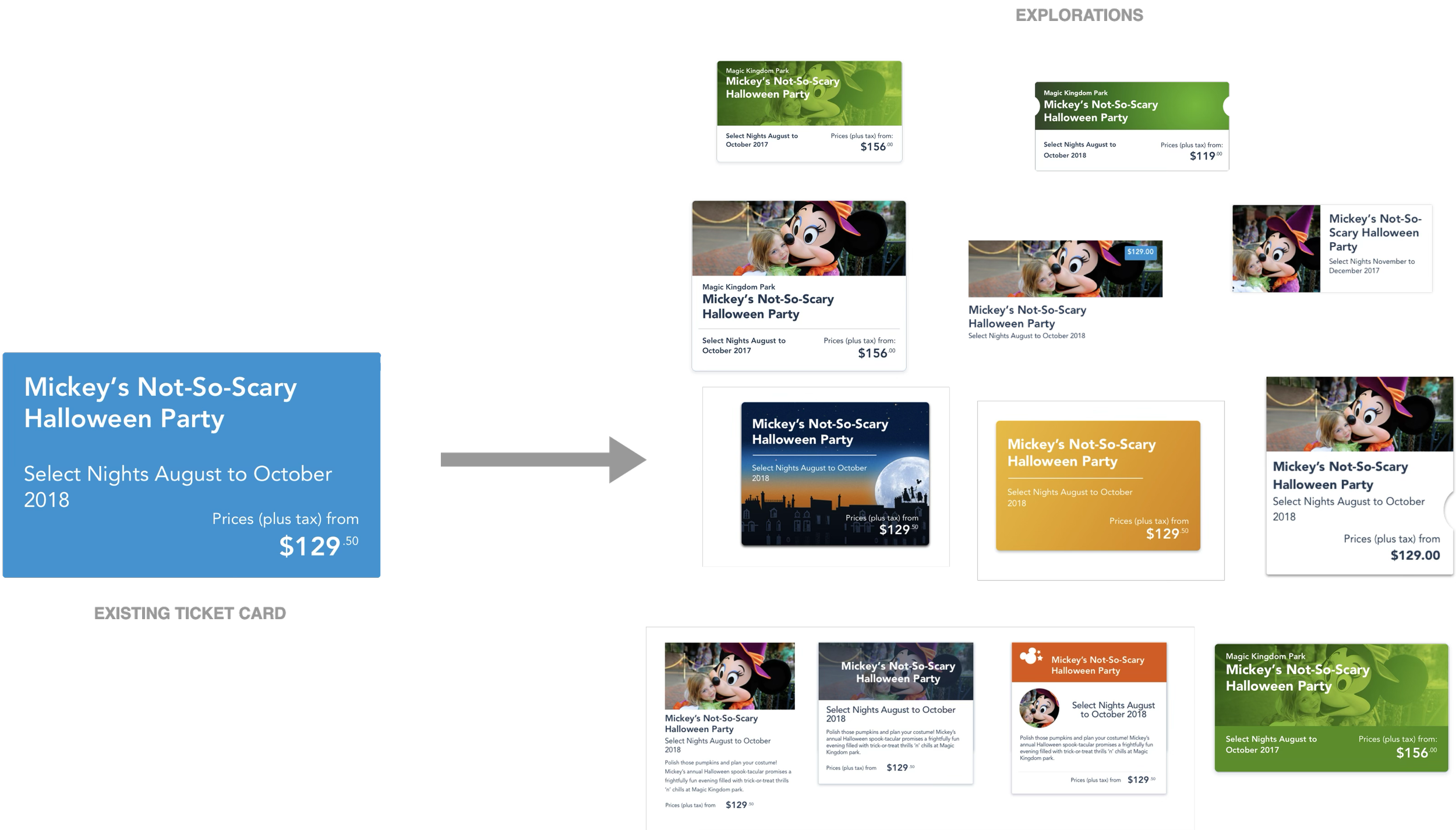
The existing ticket card was only designed around one object: park entrance. Leveraging this design pattern would create a very flat experience that did very little to visually distinguish different events.
Bringing in a broader team of designers, we asked the team for anyone to contribute any ticket design ideas they had. I distilled them into 3 main categories and picked 3 options of each to test in unmoderated preference.
Tested components
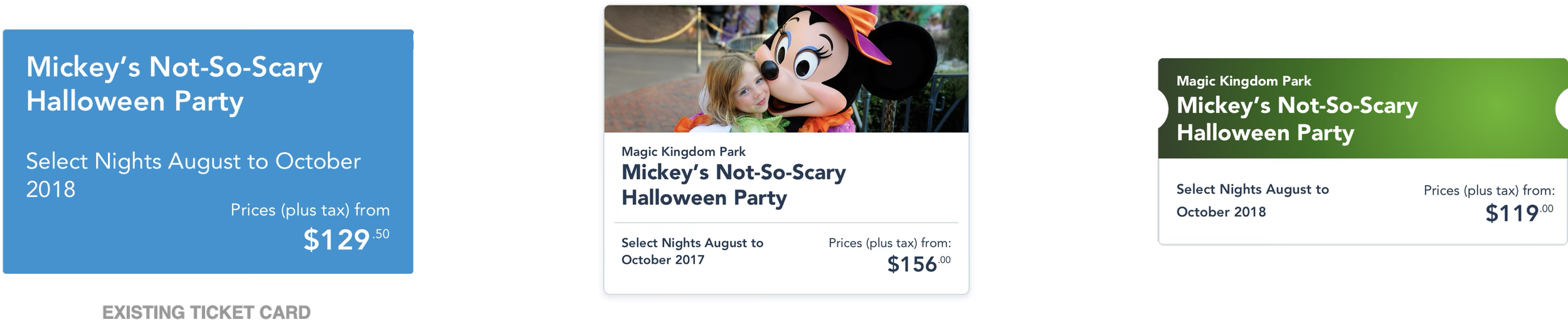
90% of test participants selected the ticket card with imagery as the ticket style that they felt most clearly communicated the event and distinguished events from each other.
Solution
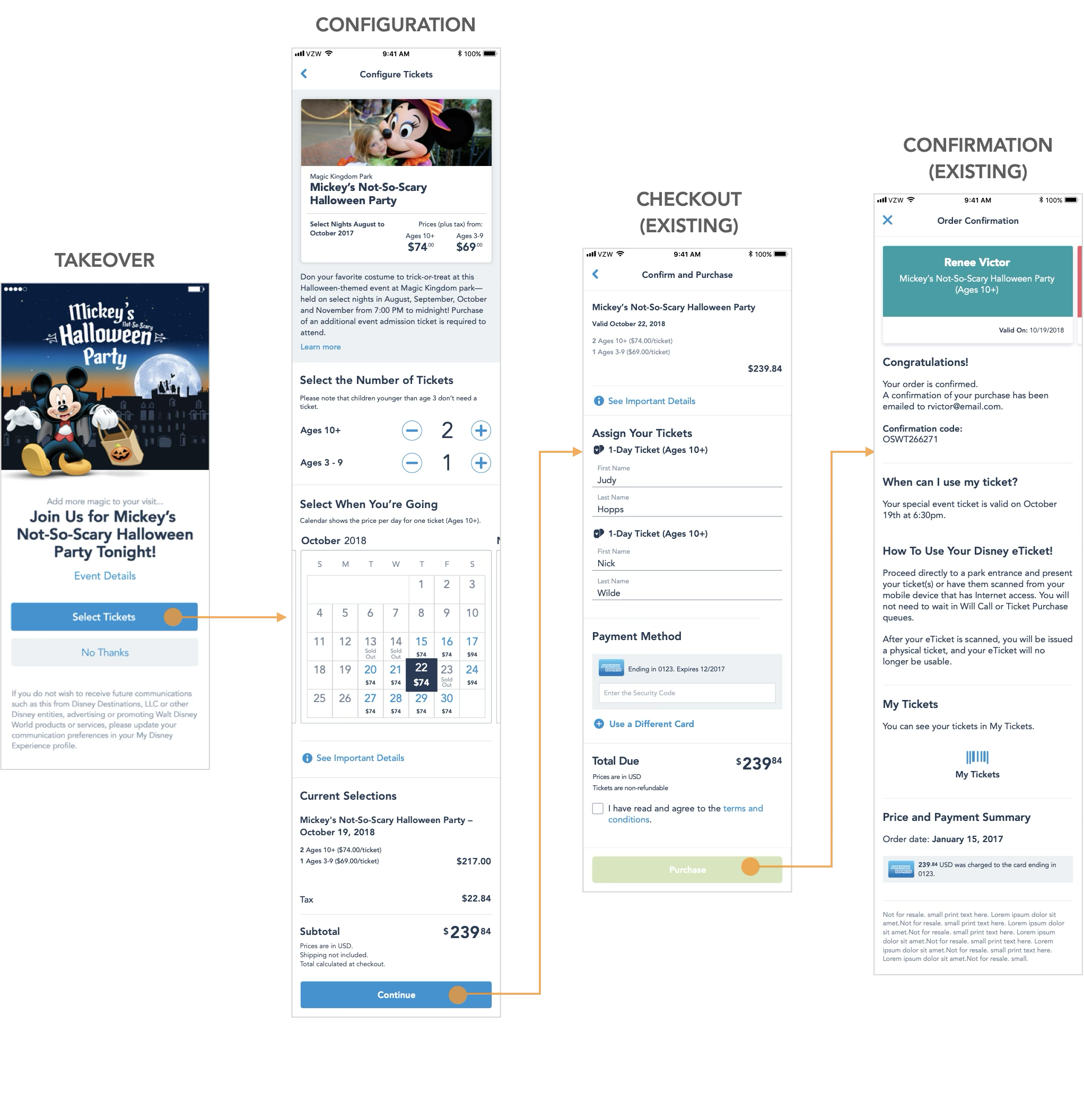
In order to meet development timelines within the predetermined quarterly roadmap, we found a way to leverage existing app framework and insert screens into this flow. This required less dev effort and less design rework
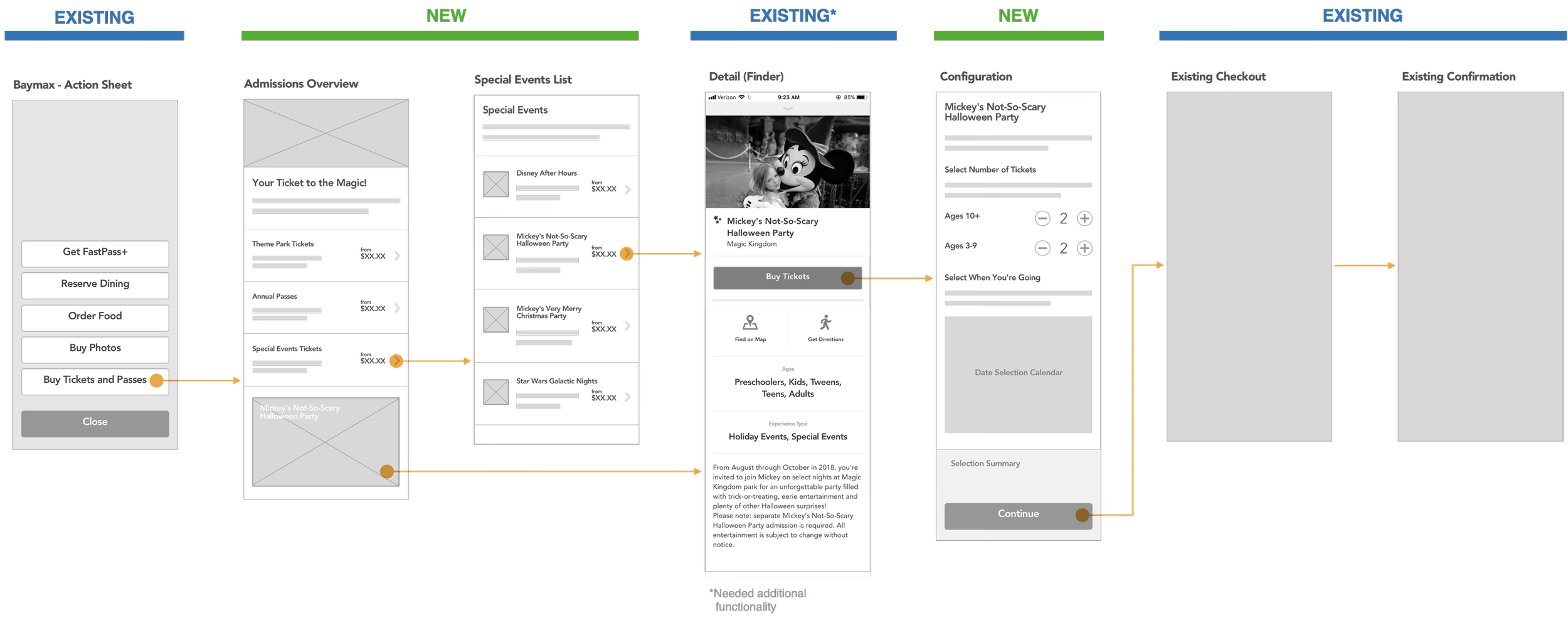
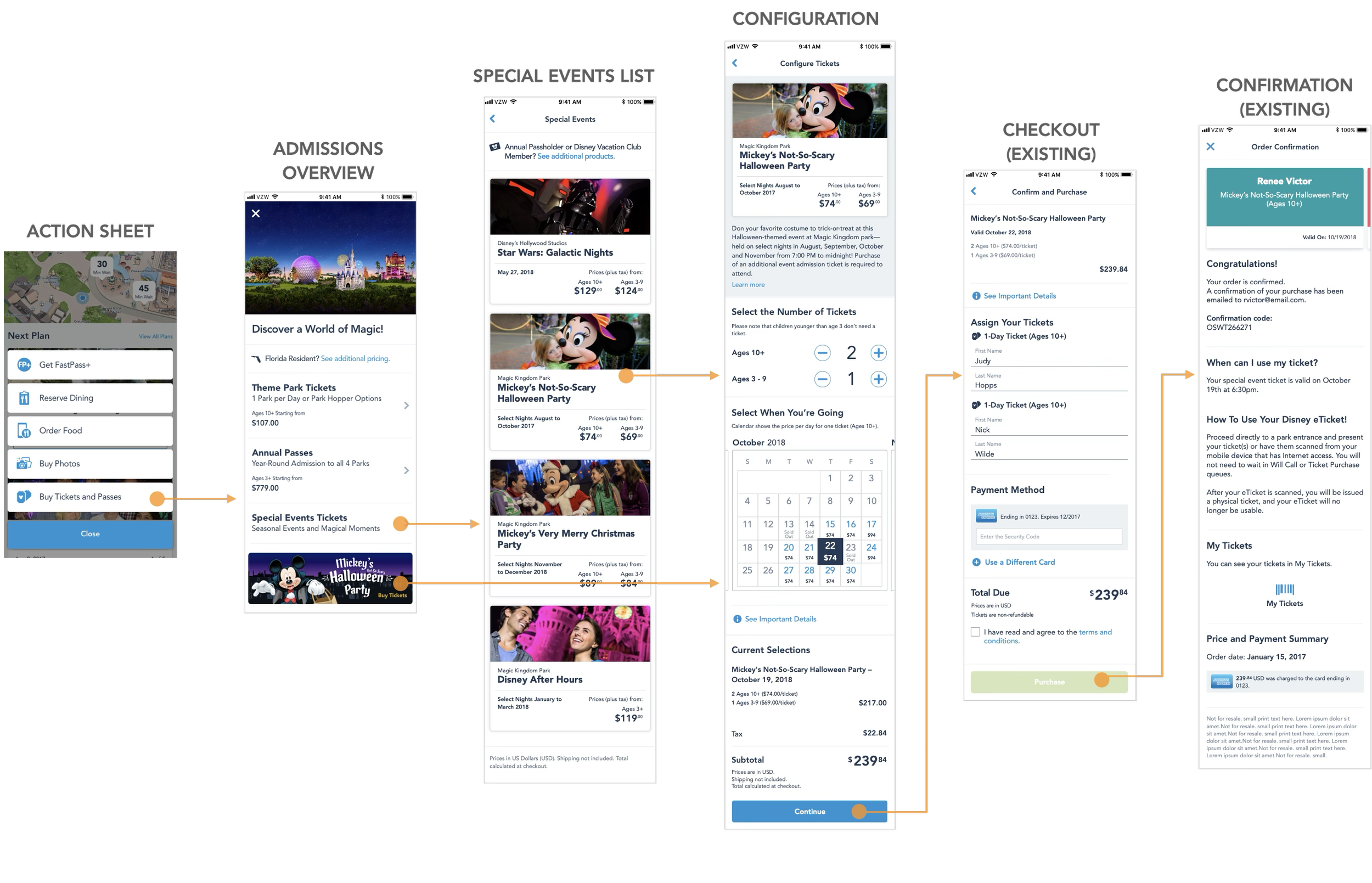
Flow and Entry Points
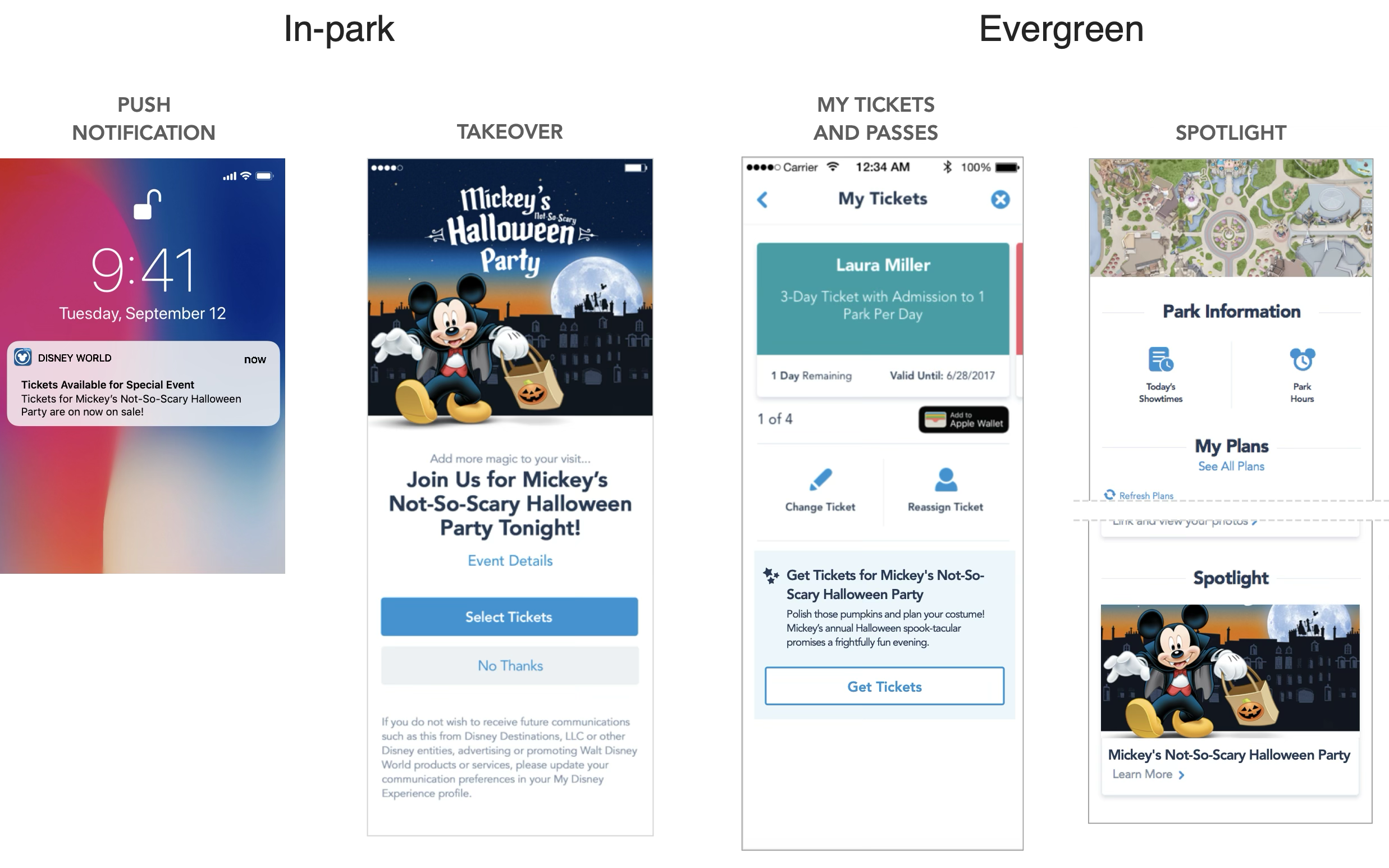
In order to meet development timelines within the predetermined quarterly roadmap, we found a way to leverage existing app framework and insert screens into this flow. This required less dev effort and less design rework
From the app’s action sheet
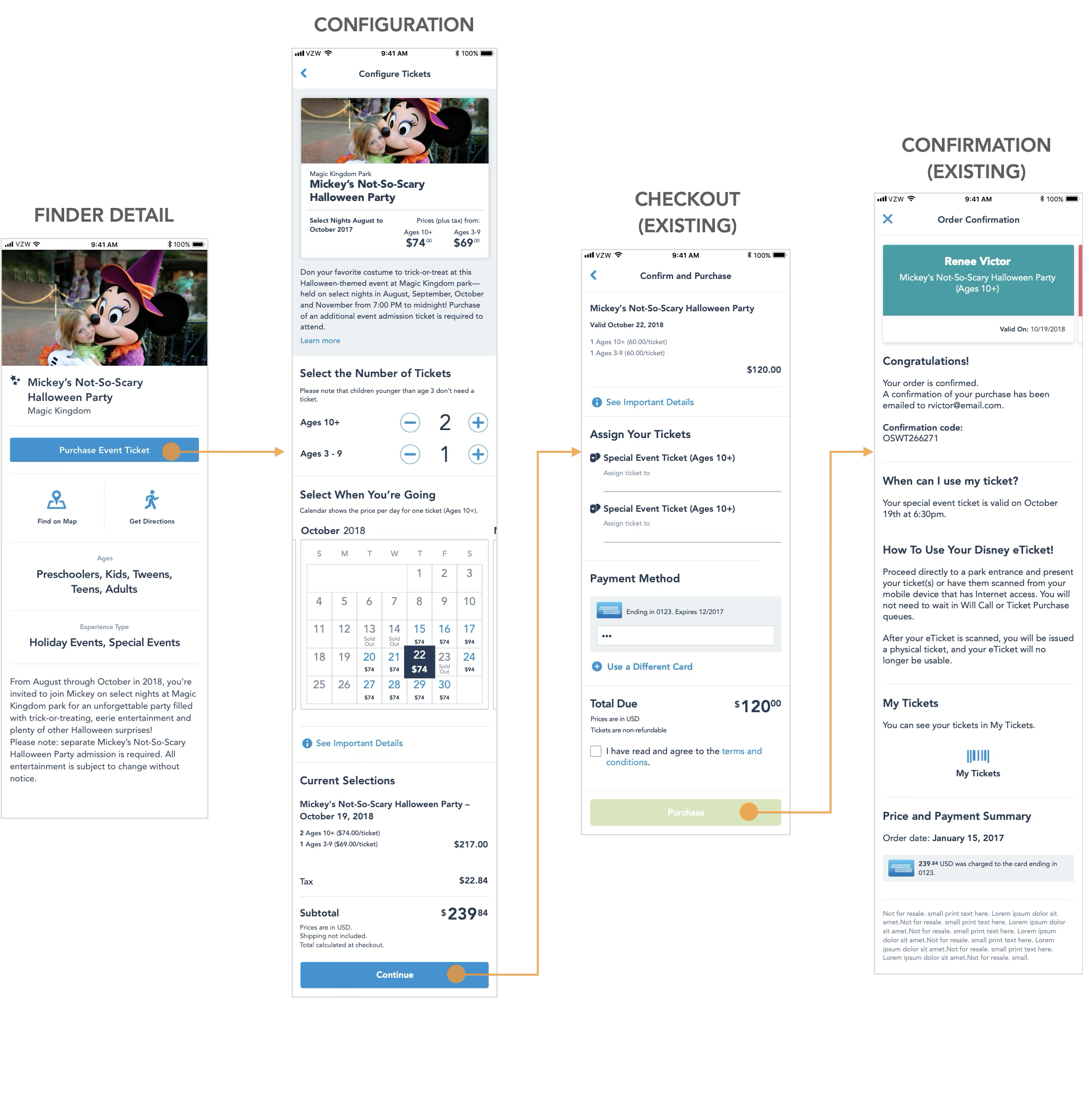
From the Finder Detail Page
From Direct Marketing takeover pages
Other Considerations
Accessibility
We also ensured that all accessibility requirements were met and each page could be read properly by screen readers.

Proposed branding optimizations
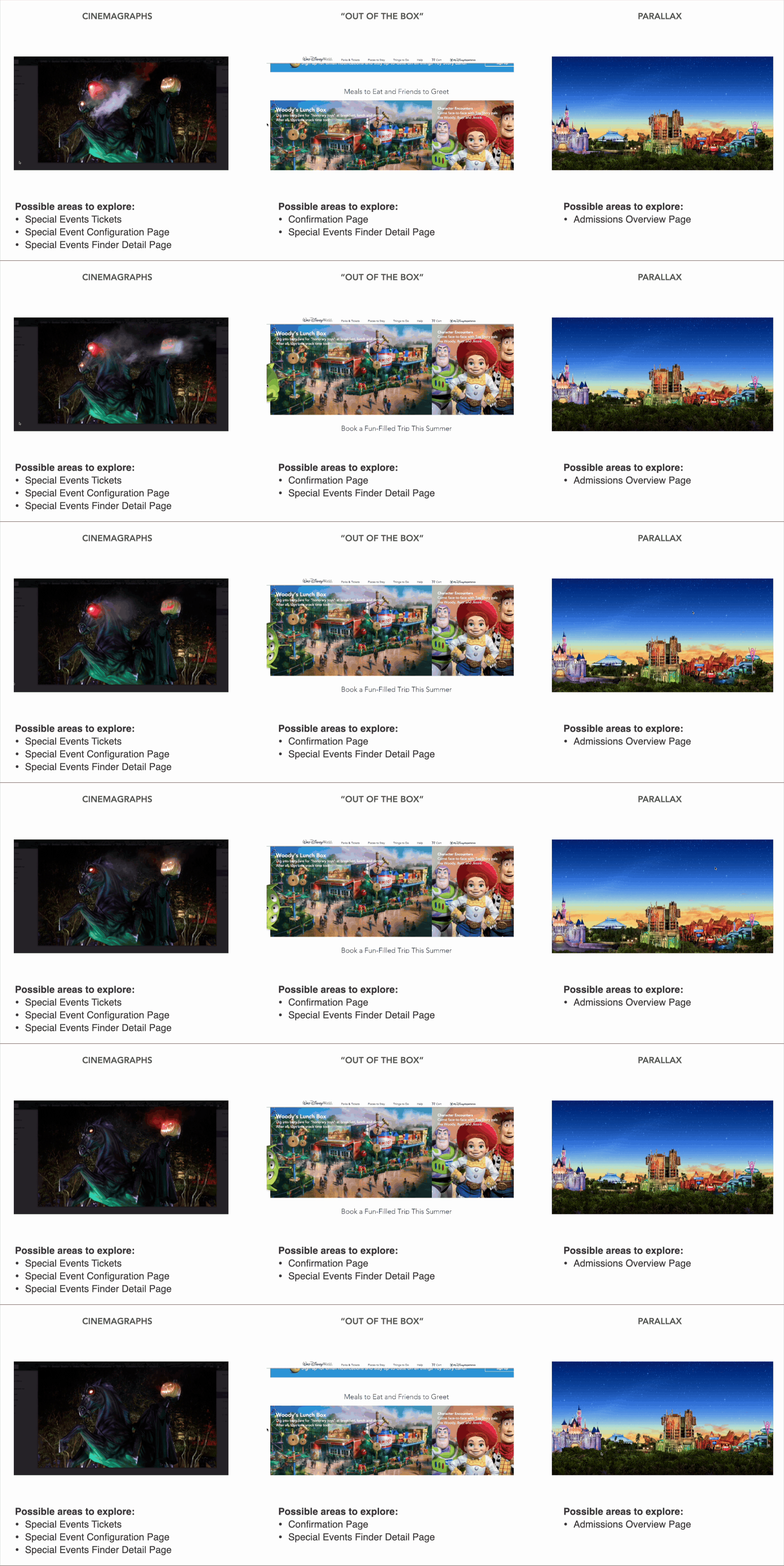
We also identified ways in which the brand experience could further inspire and delight our guests through emerging media types.